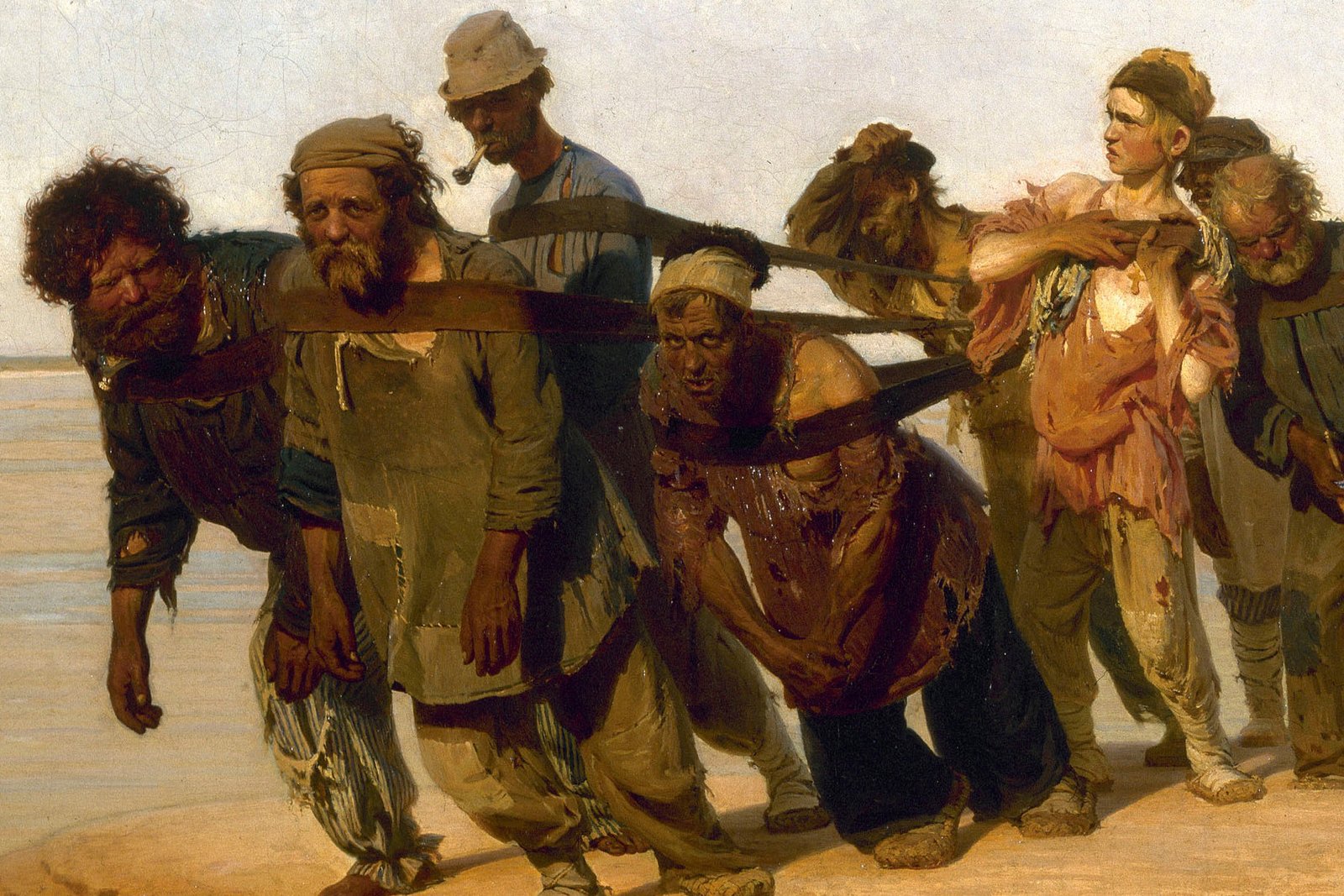
The Gravitas of Property Rights
After trampling them for millennia, benevolent states have conceded that human beings possess inalienable rights that must be respected.
As a result, each baby arriving in this world, born rich or born poor, comes swathed in a tissue of civil, political, economic, social, and cultural liberties. Being largely intangible and abstruse, no wonder they were overlooked for so long. To avoid that in future, and for the sake of convenience and consistency, they were enumerated in prominent places, like the U.S. Bill of Rights and the Universal Declaration of Human Rights. People have been squabbling about what they mean ever since.
Property rights came to dominate the other rights for the simple and ignoble reason that they’re not intangible and not abstruse. We can see, touch, measure, assess, tax, hoard, and confiscate property. Unlike all the other personal liberties — freedom of religion and conscience, right to peaceful assembly and to petition the state to redress grievances — property rights are exclusive. You don’t covet your neighbor’s right to free speech; we’ve all got that. But you may covet your neighbor’s five-acre garden because, as long as she has it, you don’t.
Luckily, at birth each baby is allotted its own little chunk of private property to get started: its body.1 From day one and for the next 15 years, that property accumulates as the body grows and develops in agility and strength. For savages milling about on Earth long ago, it was a formidable tool for claiming the resources each required to eat, clothe, shelter, and defend self and family.
Today’s savages find themselves in a quandary. Any resources they might need to sustain life and liberty are owned — or leased — by someone else. What’s more, those holdings are quite large: farmlands, prairies, meadows, orchards, great plains, forests, mountains, groundwater, mineral rights, seabeds, river systems, wildlife reserves, skyscrapers, airspace, ideas, and trademarks. To claim some property in young America, the savage needed only “go west.”2 That no longer held. The West was owned.
Those in greatest need of the state’s protection — the largest property holders — became ardent supporters of the state and took pains to inform, when not making, its decisions.
A robust democracy, the founding fathers believed, required a self-sufficient, prosperous citizenry rooted in ownership of land. Most would farm that land, creating value for the community and country. Those who used their land to establish mills or other businesses were expected to prosper only insofar as they too provided essential benefit to the community. To ensure individuals achieved the independence a vigorous democracy required, the state took on defense of property rights as one of its foremost duties.
Those in greatest need of the state’s protection — the largest property owners — became ardent supporters of the state and took pains to inform, when not making, its decisions. An intimate association developed, resulting in the state’s ever greater sympathy for the interests of those property owners. The holdings of those citizens flourished under this friendly attention, as did their influence. When the concerns of large property owners shifted from sustaining self and community to focus on growth and profit, state focus shifted as well. Individuals unwilling to devote themselves to business growth found themselves overwhelmed by those who did. And here we are.
A corporation3 owns a ranch in Texas the size of Rhode Island.4 Another corporation recently purchased 12,793 acres of land with groundwater rights in Arizona’s McMullen Valley Basin. Two hundred petroleum refineries occupy an 85-mile stretch of land along the Mississippi River between Baton Rouge and New Orleans. Coal-mining enterprises have acquired surface and mineral rights to entire mountains. These are property rights we’re talking about. When a corporation owns the groundwater or a mountain, no one else does.
As the size of corporate holdings snowballed, the interests of large property owners diverged from and became inimical to their communities. Individuals who used to access food and resources directly were now to be supplied by corporations who had, with the state’s approval, monopolized those resources. Citizens could not compete with these commercial behemoths nor, they learned, were they allowed to.
Citizens who drummed up the courage to speak out got a nasty surprise: They weren’t assembling peacefully. They weren’t petitioning the government for redress of grievances. They were terrorists.
Enabled by rapidly advancing technology, the corporate presence introduced an unprecedented intensity of activity into human affairs. Its highly concentrated mining of resources altered landscapes, contaminated water systems, choked valleys and buried headwaters under dynamite detritus, ransacked oceans, changed the atmospheric composition, and debased the quality of food people ate. As storms intensified, heat waves debilitated, shorelines receded, and suspicions of declining groundwater stirred, citizens grew uneasy. Talk of climate change circulated. Yet those citizens who drummed up the courage to speak out got a nasty surprise: They weren’t assembling peacefully. They weren’t petitioning the government for redress of grievances. They were terrorists and as terrorists they were arrested, prosecuted, and fined. Some landed in prison.
How this came about is of some interest: Citizens decried the business practices of corporations they perceived to be destroying their world. That criticism was seen to threaten corporate profits. The CEOs piloting those corporations were bound by their contracts to remove anything that impeded corporate profits, including people. To defend itself, industry lobbied the government to restrain protesters engaged in activity that attempted to malign the industry, disrupt its operations, or jeopardize its business. That activity, the industry stated, infringed on its property rights, which the government was fully committed to protecting. After years of close cooperation, state property was somehow also in jeopardy, and the state was certainly obliged to defend itself.
Corporate lobbying was fruitful. In 2005, the U.S. Department of Homeland Security named the Animal Liberation Front (ALF) a terrorist threat. The group’s criminal nature was obvious. Its intent to challenge the meatpacking industry’s property rights was clearly laid out in its mandate “to inflict economic damage on those who profit from the misery and exploitation of animals.”5 The animals whose misery and exploitation ALF referred to just happened to be the property of the meatpackers, and property owners can handle their property any way they see fit. For corporations in general, that means using property to maximize profits. For meatpackers, it means using breeding sows to birth and suckle as many piglets as possible before the sow becomes used up, at which time she is disposed of. Meatpackers received the full and vigorous backing of the state, who stepped in to curtail ALF’s rights to free speech and assembly and forbid it to publicize suspected animal abuse by which meatpackers thrive.
Suddenly designated a group that incites social and religious hatred, LGBTQ members in Russia can be prosecuted simply for displaying the rainbow flag.
Likewise, property owner Vladimir Putin, who as president has turned all of Russia into his source of immense personal wealth, has ample reason to suspect any critics as a threat to his position, and consequently, his property. As in the U.S., he stifled nuisances by adding their names to his list of terrorists and extremists. Suddenly designated a group that incites social and religious hatred, members of the LGBTQ movement in Russia can now be prosecuted simply for displaying the rainbow flag.6
Similarly, U.S. students protesting Israel’s assault on Gaza have been accused of antisemitism, pilloried (doxxed), banned from campus, and expelled from the university amid bitter denunciations of their depraved morality. The threat the students posed was their demand that universities disclose and divest from companies and organizations linked to Israel. Lots of wealth and lots of property were at stake for the corporations behind AIPAC, who spearheaded a life-changing attack on the students. The trick used to accomplish the malicious calumniation was simple, but secret: alter the working definition of antisemitism7 to include any criticism of Israel.
The last example of property owners leveraging power to compromise personal rights is grisly. It involves property owner U.S.A. and the desolation of Guantanamo Bay detention camp. As with the protesters for Palestine, the trick involved fiddling with definitions, in this case, the definition of torture. Torture is forbidden even for officers handling inmates held in custody in the home of the free and land of the brave. Enter John Yoo, member of the George W. Bush administration who enlightened Bush as to what torture actually was: the sensation of organ failure. Before that threshold is reached, Yoo assured, no torture can be said to have taken place and no immoral, illegal, or cruel punishment to have been inflicted. No one, though, was charged to determine when that threshold had been reached. And because the terrorists under interrogation were lying, depraved, disgusting animals, they were never asked.
Ownership of property, the single of personal liberties that protects the tangible, has eclipsed the others. As sophisticated, wise, and worldly as we consider ourselves to be, freedom of speech still tends to elude us, while even schoolchildren know whose ball it is.
- No mention was made about owning your soul. See The Two Treatises of Civil Government, “On Civil Government,” Book II, Chapter V: Of Property, §. 26. ↩︎
- “Washington [D.C.] is not a place to live in. The rents are high, the food is bad, the dust is disgusting and the morals are deplorable. Go West, young man, go West and grow up with the country.” Attributed to Horace Greeley, New-York Daily Tribune, July 13, 1865. ↩︎
- Corporations became the favored vehicle for major property owners to conduct business and manage their property. The legal entity afforded anonymity for investors. The corporate structure added complexity that evaded immediate understanding of its business and how it made money. To facilitate this new means of doing business, the state granted legal personhood to corporations, giving a corporation the right to own property. ↩︎
- King Ranch in southern Texas comprises 1,200 square miles, exceeding the size of Rhode Island’s land mass. It is owned by King Ranch Corporation, one of the largest privately held corporations in the United States. It businesses include cattle, hunting leases, quarter horse breeding, turfgrass, and farming (through its 60,000 acres in Florida). ↩︎
- Wikipedia contributors. “Animal Liberation Front.” Wikipedia, The Free Encyclopedia. Wikipedia, The Free Encyclopedia, 20 Dec. 2024. Web. 1 Jan. 2025. ↩︎
- “Russia’s Supreme Court on Thursday [Nov. 30, 2023] declared the international gay rights movement an ‘extremist organization,’ another chilling crackdown on gay and transgender people whose rights have been scaled back drastically since the start of the war in Ukraine.” https://www.nytimes.com/2023/11/30/world/europe/russia-gay-rights-law.html ↩︎
- Wikipedia contributors. (2025, January 18). Working definition of antisemitism. In Wikipedia, The Free Encyclopedia. Retrieved 08:46, January 22, 2025, from https://en.wikipedia.org/w/index.php?title=Working_definition_of_antisemitism&oldid=1270234508 ↩︎