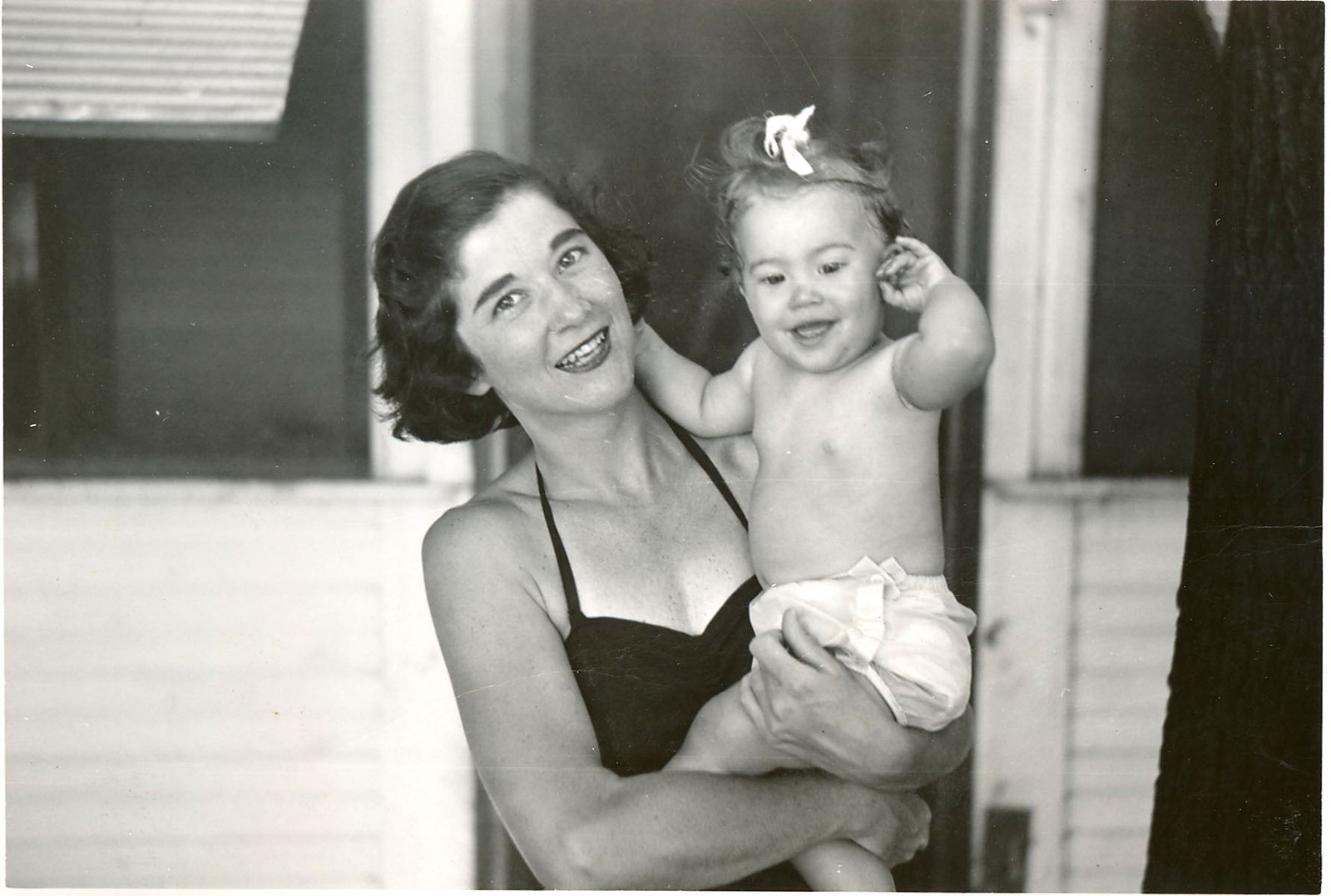
How Pious Strangers and U.S. Abortion Legislation Interfere
Today’s strident debates on the subject of abortion would have us forget how painful the issue is for women faced with making the decision.
Having a child is arguably the single most momentous event a woman can experience — whether good or bad. It triggers a transformation that consumes everything she has to offer physically, mentally, emotionally, often financially. And, as we all know, the event does not end, but only begins with the birth of the child. We also know that the single greatest good fortune a child can have is a mother willing to make that sacrifice with all her heart.
Some women are not ready for that. For whatever reason, they cannot face the prospect of bearing a child. They are unequipped to assume the lifelong commitment it requires. And something else may have already gone very wrong in her life — with her health, with the circumstances surrounding her pregnancy, with her finances. It is no place a woman wants to be. Fortunately, in the United States, those women — women in trouble — were able to end their pregnancies safely, securely, confidentially.
That has changed. Since 2022,1 a woman seeking an abortion in the U.S. finds her anguish just beginning. Rather than being granted the privacy required to attend to so intimate a matter, she finds herself the topic of virulent discussion, the target of censure and rebuke, and, not least, the object of legislation that dictates she will carry her unwanted fetus to term.
Such legislation would seem a flagrant violation of the harm principle as J.S. Mill laid it out in his essay On Liberty (1859), “The only purpose for which power can be rightfully exercised over any member of a civilized community, against his will, is to prevent harm to others.” Mill elaborated: The part of the conduct of anyone “which merely concerns himself, his independence is, of right, absolute. Over himself, over his own body and mind, the individual is sovereign.”2
How is it that the state has superseded a woman’s right to choose for herself in a matter that affects neither the state, her neighbors, nor the perfect strangers so concerned about her private decisions?
God and the human soul are what the abortion ban is all about. No one considers the spawn of frogs to be sacrosanct.
What confounds Mill’s harm principle is the fact that a woman possesses within the sovereign space over which she has the right of absolute control — her body — the equipment to gestate another sovereign space. What then? Does Mill’s individual sovereignty split at conception to become dueling sovereignties? The woman will certainly refrain from foods that suddenly nauseate her and change her habits to minimize back pain and leg cramps. But Mill requires more than the sensation of heartburn to acknowledge an individual sovereignty at work in there, including a host of capabilities an embryo does not possess, for example, consciousness. Not only in the womb, but for years after its birth, others must make decisions for the child as it develops a sense of self, knowledge of its rights, awareness of its own best interests and its limits in attaining them. Only when it comes of age, does society consider the child a responsible adult, Mill’s sovereign.
While a human zygote may not be deemed a sovereign in Mill’s terms and therefore no “other” that can be injured according to his harm principle, perfect strangers beg to differ. According to them, the human zygote acquires a soul at the moment of conception; with the acquisition of that soul, the zygote becomes a child of God and begins its journey to God; God delights in this new image of Itself, attends as it develops, looks forward to guiding it after its delivery into the world, and relishes greeting it in Heaven when the journey is over. God and the human soul are what the abortion ban is all about. None of our perfect strangers considers the spawn of frogs to be sacrosanct.
A ban on abortion imposes on all citizens alike religious strictures, contradicting the founding documents of the United States that declare there shall be no coercion in religious matters.
However widely adopted the ideas of God and the human soul may be, they nevertheless reflect basic beliefs of religious faith. In the United States, religious faith is both a matter of personal choice and optional. Not everyone adheres to a religious faith nor must they. Not everyone believes in God. Not everyone believes in the reality of a soul. Yet, legislation in many U.S. states bans abortion — not for cows or sheep, cats or dogs — but for humans based on the religious conviction of the existence of God and the possession by the human zygote of a soul. While these religious tenets may be defensible — they serve as core significance for millions of faithful citizens — codifying them in state legislation is not. A ban on abortion imposes on all citizens alike religious strictures. In doing so, the state contradicts the founding documents of the United States that declare there shall be no coercion in religious matters. Separation of church and state guarantees citizens the freedom to follow the faith of their choice. It also guarantees citizens freedom to choose no religion, granting them liberty to live outside the restraints and obligations of any church and independent of the beliefs of any faith, including God and soul.
Perfect strangers are willing to force gestation and birth against the will and best judgment of the beleaguered mother to whom they leave the burden of caring for the child thereafter.
Further bitter contradictions lie dormant in the U.S. abortion ban edict. While demanding that all conceived human life — whether unwanted, unintentional,3 or disfigured — be brought to term, there is no demand for programs to welcome and care for the unwanted infant after birth. That responsibility is thrown back on the reluctant mother, who had declared herself incapable of bearing the child in the first place.
The cynical dodge puts me in mind of a strangely humorous post on Facebook, where a woman took to soundly lambasting women seeking abortions for their selfish desire to murder their unborn children. After an impassioned diatribe against those wicked women, the post enjoined all readers to act together to have those would-be baby murderers arrested and put in prison in order to save all those brown babies.
Hello? Brown babies generally come from brown mothers. All those would-be baby murderers are women of color? In a few swift sentences, the post proclaimed a message of expansive religious charity couched in withering racism, leaving one to wonder who would care for those brown babies with all their depraved brown mothers in jail. It is doubtful whether the religious Facebook user would be on board. She, in all likelihood, would be pursuing the dispatch of other urgent concerns.
The plea of the perfect stranger to ban abortion for other women is as contradictory as the Facebook post about saving brown babies by incarcerating their mothers. To the glory of God, suchlike are willing to force gestation and birth against the will and best judgment of the beleaguered mother to whom they leave the burden of caring for the child thereafter. Pious and devoted to their faith as they may be, perfect strangers must refrain from measuring their virtue by the sacrifice they extract from others and trust the woman to choose for herself.
- “Dobbs v. Jackson Women’s Health Organization, No. 19-1392, 597 U.S. 215 (2022), is a landmark decision of the U.S. Supreme Court in which the court held that the Constitution of the United States does not confer a right to abortion. The court’s decision overruled both Roe v. Wade (1973) and Planned Parenthood v. Casey (1992), returning to individual states the power to regulate any aspect of abortion not protected by federal statutory law.” Wikipedia, https://en.wikipedia.org/w/index.php?title=Dobbs_v._Jackson_Women%27s_Health_Organization&oldid=1218901013. ↩︎
- Textualists such as we have on the U.S. Supreme Court today will point out that Mill used the masculine pronoun, giving them leeway to argue that Mill clearly meant to exclude women from this principle, i.e., over the conduct of women, though that conduct ostensibly pertains solely to and has repercussions only for the woman herself, outside restraint may be exercised. ↩︎
- Not to be forgotten is how often a pregnancy is unintentional. Worldwide, about 121 million unintended pregnancies occurred annually between 2015 and 2019. While this figure does not necessarily reflect negligence on the part of the woman, it does reflect the number of women who find themselves unintentionally — often unwillingly — impregnated. Guttmacher Institute, https://www.guttmacher.org/fact-sheet/induced-abortion-worldwide. ↩︎
This is very well written and covers the complexities of this issue pretty well.
Read your excellent column. It is very well written and reasoned, as always. In one of the later paragraphs you write of a “U.S. abortion ban edict”. There is no abortion ban edict in the U.S. as a whole. There are abortion bans in several states, as well as several states which allow abortion up to full-term.
I may have used the language incorrectly. I was referring to the fact that US abortion bans seem to be spreading throughout the country and are scaring women, who don’t know what’s coming next. I know there’s no federal ban on abortion, and most abortion laws aren’t bans but, as you say, limit the time for which an abortion is allowed. So pardon the inaccuracy in my language.
I’m a little burned out with the debate. I think the crux is whether you consider life (not consciousness, but who knows?) to begin with conception. On logical more than theological grounds, I don’t see how it doesn’t. So I don’t see how the fetus is not harmed; though it also seems to me that if someone shot me in my sleep he would be doing me no harm, since I would then be either non-existent or beyond harm. Strangers decide other people’s lives all the time, like sending them off to war, which I’m afraid will be with us for some time to come. The idea of sovereignty, which I hadn’t thought of in connection with abortion, strikes me as more helpful than rights. The mother’s rights are unique, but I imagine the fetus, the father, society all have some rights in the matter. I still don’t know how I would decide if I were on the Supreme Court, though by all accounts the legal basis of Roe vs. Wade is sandy. Science and medicine and inquiry generally seem to me God’s gift to humanity (which seems to me of a different order than, say, frogs; I am a blatant speciesist), and maybe fetuses known in advance to be defective should be aborted rather than neglected or warehoused. Though you have to watch out for eugenics and genocide. Could the woman worried about brown babies have feared that mothers from minority groups are more easily pressured into abortion? And I agree that it is incumbent on pro-lifers to fund programs for the many youth who will be born at risk. Another reason I don’t have the heart to debate is that the picture you included is rather poignant. In itself it is a counterargument, I would say, but for personal reasons.
It’s perfectly understandable that you’ve been burned out by the debate on abortion. While writing the essay, I found that I too am heartily sick of the subject. (I am, actually, against abortion and would rather women had the support and means they require to prevent conception, but some faiths and churches are against that as well, which I consider to be idiotic beyond comprehension; also, we can’t forget the many pregnancies that occur against the will of the woman.) My message in the essay was simply to point out that anti-abortion legislation represents the conviction of a religious portion of U.S. citizens and such legislation is not defensible under the American principle of separation of church and state.
The crux for the abortion issue, as I see it, is not whether life starts at conception but whether human life starts at conception. Another fundamental issue is whether human life is invested with a soul at all, and if such a soul is bestowed by and proof of the existence of God. That’s where the religious aspect creeps in, which must not serve as the basis of U.S. legislation.
I don’t think one has to be conscious of being dealt harm to suffer harm. A good case is children: they might not know they are being hurt by any number of measures, restrictions, or punishments, but they are. Child labor laws exist to prevent that as do other protections, such as mandatory education. Although it occurs before the fetus is consciousness (we think), abortion causes great harm. It destroys the fetus. If you were shot in your sleep, as you mention in your example, grievous harm would been done whether you felt the pain of the fatal wound or not. Of course, you might not care or even know about it once dead, but what had existed at the point of death would have been robbed from you against your will or knowledge, something I consider to be very harmful.
I like your point about strangers deciding other peoples lives all the time. That’s very true, although it doesn’t meant they should be. Also, I think you’re right in saying that, in addition to the mother’s interest, the father and society should have a critical interest in a woman’s safe and healthy pregnancy, but do they? Anti-abortion laws are hostile to the woman’s health and dubious in the case of an endangered fetus. However, it is because the issue is so difficult to decide — as the endless debates demonstrate — the decision should be left up to the mother and those involved, who are intimately aware of the circumstances, rather to the government, which is not. Your statement about human intelligence (science, medicine, inquiry) being a gift of God begs the question: the dispute rests on whether the U.S. government can impose the religious convictions of those who believe in God to restrict the choices of those of contrary religious backgrounds or of no faith whatsoever.
The photo I used for the essay was my feeble attempt to steer away from talk about murdering fetuses and emphasize the joy and glory of a child’s life when the mother is ready, able, and willing to make the enormous sacrifice required of her to care for that child and instruct it up until the time many, many years away when the mother hopes (so often vainly) that it can take over for itself.