The Abstraction of the Corporal
The conjunction of the intangible and the tangible. Light and sight. Gravity and weight. Mind and body. Liberty and life. Nothing baffles us more.
By definition the intangible is what eludes our perception. And so, to get us on board, about 600 million years ago the universe revealed itself to us. Most dramatically, its light forged an organ — the eye — to behold it.1 With an eye to see, life took in itself and its cradle, the universe, which had been hulking invisible for nearly 4 billion years.
The force of gravity baffled us until Isaac Newton turned to the occult in the early 18th century to explain its mysteries.2 We still discuss whether mind exists. Liberty may be a myth if humans nowhere are free.
Quantifying the tangible is as difficult for us. We are impeded in that task by our intelligence, which has inbred biases we cannot escape. The great forces of the universe shaped our senses specifically to detect those forces. Our prudent organs responded to the degree necessary to preserve life. Narrowly honed to respond only to the strands of cosmos that advantage us, our senses, which serve as the basis of our intelligence, encumber it with their selectivity.
Thus, the senses create a kind of tent within which each human consciousness dwells. The tent’s size and shape reflect the power and perspicacity of each habitant’s senses. Snug and cozy inside, we are trapped as well. We cannot penetrate beyond our tent’s membrane. Yet we are satisfied with what we find inside. We cherish it as reality and truth.
Language provides signals that there are other tents out there sheltering other habitants. That by no means makes it certain. Solipsistic by nature, we remain skeptical. We can deny it. Many do. The degree to which we do believe other tents are out there corresponds to our capacity to adopt the experience of others as our own, creating empathy, the foundation of our humanity.
Tethering a human risks destroying the individual, which is known. When humans are tethered, it is with the intent, if not to destroy, then to torment them.
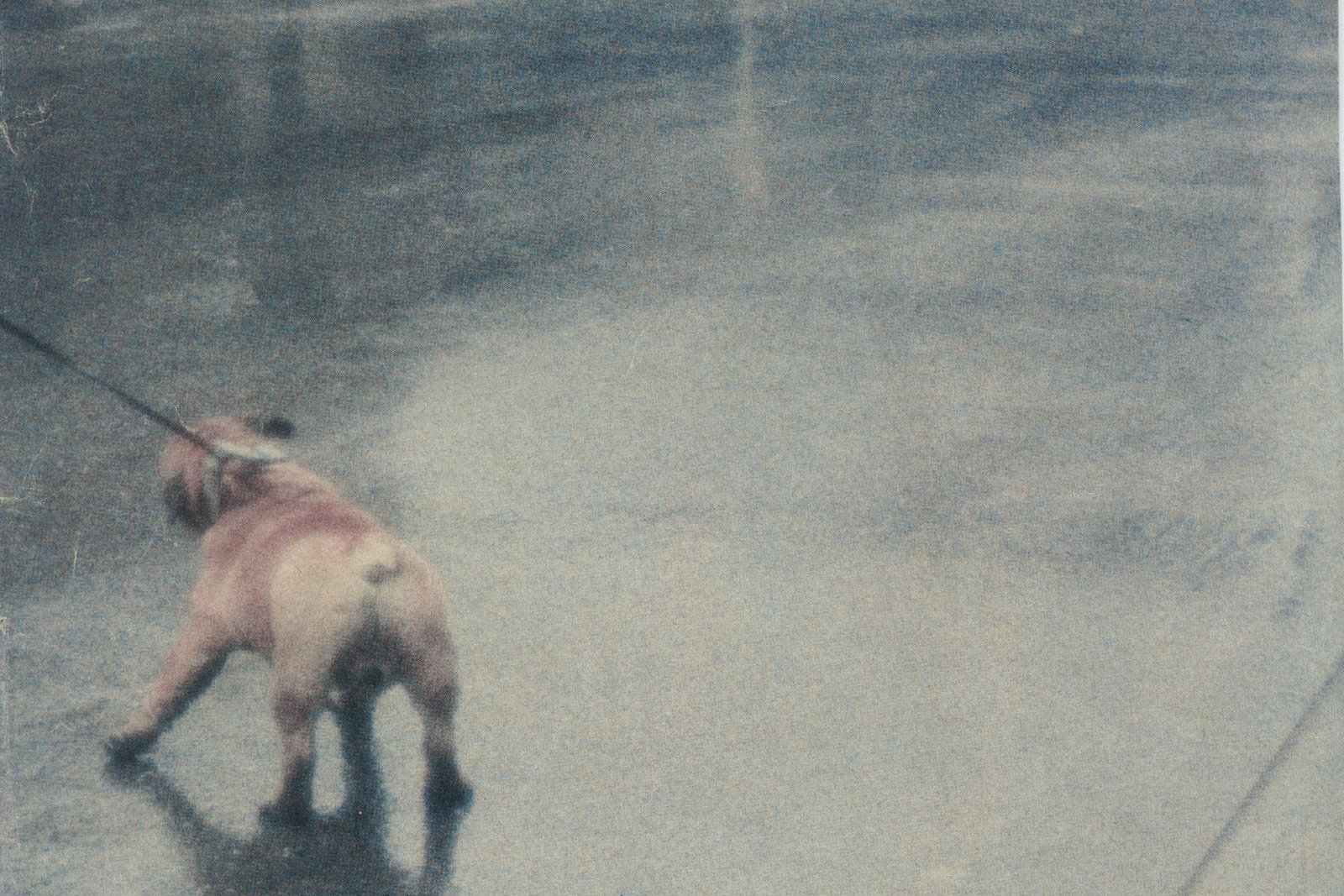
The recognition of something so abstract as inalienable rights attached to earth-bound, toiling bipeds is miraculous. Apparently, one particular DNA construction requires liberty. How did something so clumsy as flesh require an abstraction? While we must leave amphibians and reptiles out of our discussion as they defy our comprehension, we do detect that higher mammals — dogs and cows — do not require liberty. Once trained, no dog resents the leash; a cow shows no irritation at the fence.3 In contrast, tethering a human risks destroying the individual, which is known. When humans are tethered, it is with the intent, if not to destroy, then to torment them.
The imbecilic complacence of the leashed dog may lie in who’s holding the leash. A dog might indeed resent being taken for a walk by another dog. The absurdity of that picture, though, exposes another distinction between human and other life forms. No dog would consider laying claim to another dog. By contrast, not only did humans conceive of laying claim to other humans, they strenuously maintained the practice for hundreds of years. Because we do not recognize dogs and mules as having rights to be denied, we do not consider enslaving them to be possible.4 Human slavery, however, has been universally condemned because we acknowledge that it abridges the intangible rights of self-determination indispensable to the dignity, well-being, and sanity of a very tangible creature designated — not pony, buffalo, or rat — but human being and human being alone.
So what are these abstractions called inalienable rights? To protect them, we must catalog them. To catalog them, we must know what they are. But we don’t quite. To determine which are indispensable we need only deny them to certain people and see where the shoe pinches.5 More difficult is to determine to what degree a right can be denied before the human howls. It is of utter importance that we bend ourselves to this task to ferret out the notorious welfare queens faking what they need to cheat a little more out of the state. And of course, not irrelevant is the question of cost. To what extent should piddling rights like free speech and right of assembly be protected?
The one right that appears secure is, not surprisingly, the most tangible: owning a gun. Whether someone is armed or not gives rise to zero confusion, the reason perhaps President Donald Trump signed an executive order proclaiming the second amendment to be the bedrock of all other rights.6 It was the only one he understood. According to him, having a gun authorizes the bearer to declare if the slaughter of the last Palestinian was genocide or self-defense.
What a clever government does is change the laws while maintaining its authority to enforce citizens’ obedience.
Paring down human rights is forbidden and, one might argue, impossible, since they are said to be inalienable and hence immutable. What a clever government does instead is change the laws while maintaining its authority to enforce citizens’ obedience. Slicker still is when a ruling body leaves the law unaltered, but changes the definition of what the law forbids or protects. It happens all the time. For starters, the list of U.S. terrorists — those proclaimed to engage in terrorism and hence are criminals — has been extended to include climate, animal rights, and peace activists. Another endeavor can be seen in the dead-serious attempts being made to tinker with the definition of antisemitism to include criticism of Israel. Freedom of speech itself was resized in 2010 to accommodate the speaker’s bank account.7
Mandated to enforce the law, the state now arrests climate activists. It expels students who demonstrate for a ceasefire in Gaza. It submits to the will of wealthy donors who, owning more free speech than we do, legally subvert our vote in one election after another.
As society changes and understanding of the human experience deepens, we would expect a mature government to broaden its protections of citizen rights, not straiten them.
From time to time we may suspect that our intangible rights are getting squeezed. But the key question is: Shouldn’t it be going the other way? As society changes and understanding of the human experience deepens, we would expect a mature government to broaden its protections of citizen rights, not straiten them. Significant new groups have emerged among us: the aged, the handicapped, the obese, LGBTQ+, savants.8 We also have a body of medical, psychological, and sociological knowledge and a wealth of professionals who dedicate their careers to understanding the emerging needs of these new populations. Understanding their needs obliges society to address those needs.9 To respect the dignity of the wheelchair-bound, cities need only build ramps, a simple solution to a new need to protect an old right in a way not previously necessary. However, rather than embrace these individuals and determine the best ways to support them, governments target, demonize, and suppress groups of their choosing for reasons they do not disclose to us.
No, we cannot imagine what it’s like inside someone else’s tent. But for all our curiosity, apparently, we don’t want to. Once we get too close — aided by our advancing sciences — we tend to blanch and retreat, hurl insults, and do what we do so well — shut strange life forms down. We are in the process of shutting down the stout-bodied Bale Mountains tree frog, the fabulously feathered white-backed vulture, the maned three-toed sloth, the delicate reef corals and are busy boiling the fishes in their sea kingdoms, all life forms of pure corporality unfettered by abstractions. If we, the DNA with liberty, are entirely successful in our mania to shut off those unlike ourselves, whichever human demographic emerges as the single life form on Earth will not gloat for long. Rather than vanish, an extinction one would consider imminent, its liberty-addicted DNA might coax it into accepting the graveyard shift cleaning test tubes on Mars for Elon Musk, a fate dismal perhaps, but well deserved.
- “All modern eyes, varied as they are, have their origins in a proto-eye believed to have evolved some 650-600 million years ago. The majority of the advancements in early eyes are believed to have taken only a few million years to develop, since the first predator to gain true imaging would have touched off an ‘arms race’ among all species that did not flee the photopic environment.” Wikipedia contributors. “Eye.” Wikipedia, The Free Encyclopedia. Wikipedia, The Free Encyclopedia, 4 Feb. 2025. Web. 14 Feb. 2025. ↩︎
- “Newton was criticised for introducing ‘occult agencies’ into science because of his postulate of an invisible force able to act over vast distances. Later, in the second edition of the Principia (1713), Newton firmly rejected such criticisms . . . writing that it was enough that the phenomena implied a gravitational attraction, as they did; but they did not so far indicate its cause, and it was both unnecessary and improper to frame hypotheses of things that were not implied by the phenomena.” Wikipedia contributors. “Isaac Newton.” Wikipedia, The Free Encyclopedia. Wikipedia, The Free Encyclopedia, 8 Feb. 2025. Web. 14 Feb. 2025. ↩︎
- What must be stressed is that humans exert no effort to determine when an animal is suffering, either. Cows forced to spend all seasons lying in the shadows of a barn because taking them out to pasture is no longer cost-effective is a moral outrage. Worse, converting those pastures into wheat and corn fields robs the cows of them, leaving them with nowhere to go. ↩︎
- Many animal lovers and friends of all life would have something to say about this. ↩︎
- And, of course, we must first define what “pinch” means. The state has no intention of humoring fakers. ↩︎
- It’s a preposterous stance. To guard against infringement of their rights, a citizen’s first best bet is apparently to threaten to shoot anyone who attempts to interfere as they exercise those rights. If that doesn’t work, the armed citizen can simply shoot the offender outright and will certainly be interfered with no more, establishing in the process just one more tidbit of territory in America that is truly free. The single limit this approach imposes on a citizen’s liberty is how much ammo they can afford. And here the shrewd Trump — ever on the ball — nixed the Biden administration’s attempt to “end the livelihoods of law-abiding small business owners in an effort to limit Americans’ ability to acquire firearms [and ammo].” https://www.whitehouse.gov/fact-sheets/2025/02/fact-sheet-president-donald-j-trump-is-protecting-americans-second-amendment-rights/ ↩︎
- Citizens United vs. FEC. ↩︎
- “Savant syndrome is a phenomenon where someone demonstrates exceptional aptitude in one domain, such as art or mathematics, despite significant social or intellectual impairment.” Wikipedia contributors. “Savant syndrome.” Wikipedia, The Free Encyclopedia. Wikipedia, The Free Encyclopedia, 14 Feb. 2025. Web. 24 Feb. 2025. ↩︎
- For an original and illuminating discussion, see “Draft for a Statement of Human Obligations” by Simone Weil, French intellectual, philosopher, mystic, political activist, and one kooky lady. ↩︎
This touches on very complicated relationships:
Patriarchy;
Eagle vs Serpent;
Word of God;
Unbelievers;
etc.
Not to mention grift and graft!